
Private AI Infrastructure on Dedicated Cloud or Owned Hardware

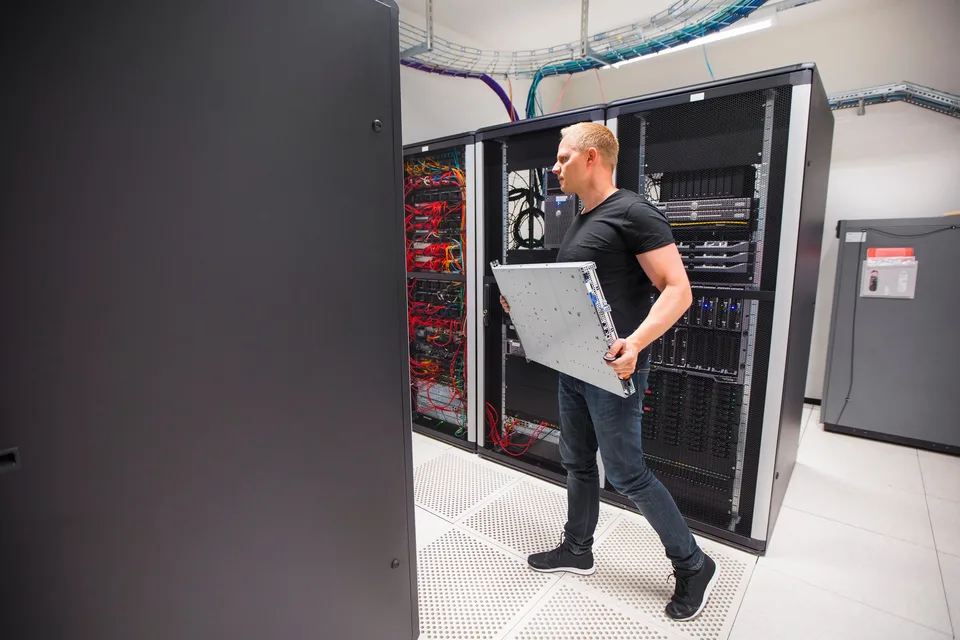
Infrastructure engineer carrying a rack server chassis down a data center aisle.

Hosted AI APIs work well for early prototypes, right up until customer contracts, compliance rules, or steady volume point you toward dedicated GPUs. We evaluate, deploy, and operate private language-model and document-retrieval systems inside cloud VPCs or owned server racks under your control.

Dedicated VPC & on-prem GPUs Permission-aware RAG vLLM & llama.cpp Production operations

Evaluating the Workload Before Committing to GPU Hardware

Commercial enterprise AI APIs make sense when traffic is bursty or a team is still testing an idea. Even with contractual zero-retention terms, though, a hosted API is not sufficient on its own for every environment. What happens when customer contracts, HIPAA, PCI DSS, or legal privilege require prompts, embeddings, and logs to stay inside a VPC or server rack you administer? Or maybe the problem isn't compliance at all, but rather an upstream vendor retiring a model version on short notice and breaking a structured extraction job that worked fine last month?

So, where do you start? Before signing a reserved-instance commitment or buying GPU servers, benchmark candidate models against representative tasks and measure real memory, latency, and concurrency under load—and of course, verify that document permissions hold up during retrieval. Hardware comes second.

Systems engineer benchmarking server rack configuration on a laptop between cabinets.

Task-Specific Model Evaluation

Test open-weight checkpoints and quantization levels against your real search, extraction, classification, or drafting tasks using plain human review criteria before sizing GPUs.

Permission-Filtered Retrieval (RAG)

Enforce Entra ID, SharePoint, or database row-level permissions inside pgvector or Qdrant before retrieved passages ever enter the model context window.

Application & Network Controls

Block outbound container egress once verified weights are staged, authenticate callers via OIDC or service tokens, and bound the actions a model can trigger.

Comparing Commercial APIs, Dedicated Cloud VPCs, and On-Premises GPUs

Vendors often lump training exclusions together with prompt retention, support telemetry, and network residency. Those are four separate questions. Picking the right setup depends on your sensitivity rules, concurrency pattern, and appetite for hardware lifecycle work.

Deployment Option Best Operational Fit Data & Model Control Cost & Operations Profile
Commercial Enterprise API
Hosted zero-retention tier
Low-volume internal tools, rapid prototyping, and broad multi-step synthesis Prompts traverse vendor endpoints under contract terms; upstream model versions retire on vendor schedules Pay-per-token billing with minimal infrastructure overhead; cost scales directly with document volume
Dedicated Cloud VPC GPU
AWS, Azure, or GCP in your account
Regulated SaaS features, HIPAA/PCI/SOC 2 environments, and growing production workloads Weights, vector indexes, and logs stay inside your private subnets and KMS keys; pinned model versions Hourly or reserved GPU instances sized to concurrency; scale up or change GPU generations without hardware lead times
On-Premises / Colocated GPU
Owned rack servers
Continuous high-throughput batch extraction, strict local residency rules, or existing data-center racks Physical hardware, storage drives, and local network isolation remain entirely in your custody Upfront server capital cost amortized over multi-year runs; requires power, cooling, and spare-part planning
RocketDocs · Private AI

Production Private AI Infrastructure for RocketDocs

  • Private inference architecture and deployment
  • Access controls and network isolation
  • Ongoing monitoring, backups, updates, and support

Proposal and response-management teams work daily with confidential pricing, security questionnaire answers, and product documentation—material enterprise customers expect to keep isolated from public multi-tenant AI services.

briskData helped RocketDocs design and deploy its private AI system and continues to manage and support it in production, handling access controls, GPU performance, monitoring, backups, tested updates, and day-to-day engineering maintenance.

Read the RocketDocs project summary

Engineering Deliverables and Companion Reviews

Infrastructure

VPC & GPU Server Operations

Standing up a model container takes an afternoon; keeping GPU drivers, OS patches, queue telemetry, and backups healthy six months later is the real work. We deploy vLLM and llama.cpp stacks with continuous batching and check Terraform or Ansible code straight into your repository.

Read our hardware vs cloud guide
Retrieval & logs

Access-Controlled RAG & Audit Policies

Self-hosting gives you the switches to control access, though those switches still need testing. We verify retrieval filtering with authorized and unauthorized test accounts and align prompt and output logging with your privacy and legal-hold rules.

Read the private AI security guide
Application safety

AI Prototype & Code Reviews

If your team has already built an internal assistant or customer-facing AI feature, our software and security engineers review prompt-injection paths, tool-calling permissions, tenant isolation, and database query safety before launch.

Explore AI application code reviews

Questions About Private AI Infrastructure

Should we deploy in a cloud VPC first or purchase GPU servers outright?

Benchmarking inside a dedicated cloud VPC first usually saves money and regret, unless your workload already runs flat-out all day. Renting cloud GPUs lets us test 8B, 32B, and 70B models against your real documents in a few days rather than waiting weeks on server lead times, rack power, and cooling. Once concurrency settles down, moving a containerized vLLM stack onto owned hardware is straightforward.

How do open-weight models compare with commercial hosted APIs?

It depends heavily on the task. For document Q&A, summarization, classification, redaction, and structured JSON extraction, current open-weight models often match hosted APIs once chunking and evaluation sets are tuned to your records. For wide-open reasoning across ambiguous prompts, frontier hosted models can still hold an edge. That is why we test both against your actual documents before you commit.

How do you stop one employee from retrieving another department's restricted documents?

Prompt instructions alone will not enforce access control. Each indexed document chunk carries permission metadata from the source system, such as Entra ID group memberships, SharePoint ACLs, or application tenant IDs. When a user runs a query, the gateway checks their identity first and filters both vector and keyword search before any text ever reaches the model.

Can private model endpoints connect to our existing software?

Yes. Serving engines like vLLM and llama.cpp expose OpenAI-compatible REST endpoints alongside structured JSON schema enforcement, so internal Python, .NET, PHP, Node.js, or Java applications can call private inference with sensible timeouts, rate limits, and fallback handling.

Scope a Private AI Environment

Describe the workflow you want to run, rough user or document volume, data-handling rules, and whether you lean toward a cloud VPC or owned hardware.

  • Benchmarking candidate models and GPU memory on representative tasks
  • Permission-aware RAG retrieval connected to your identity provider
  • Documented deployment plus ongoing monitoring, patching, and support

For regulated teams, software companies, and enterprises deploying private LLM and RAG workloads. NDA available.

Scope a Private AI Environment

An NDA is available before you share sensitive details. You can request one in your message.

Your message goes directly to an engineer.

Privacy policy · No passwords or sensitive files, please.