Business Software and API Integrations
We connect applications through supported APIs or import and export processes. Available access, record volume, and update frequency determine how the connection can operate.

We connect your business software, online store, and payment systems to reduce manual work and keep your data in sync.
We connect the systems staff otherwise update by hand: inventory in an online store, orders in a business application, and payments in a registration system. We use existing connectors where they fit and build custom integrations where the business rules require them.
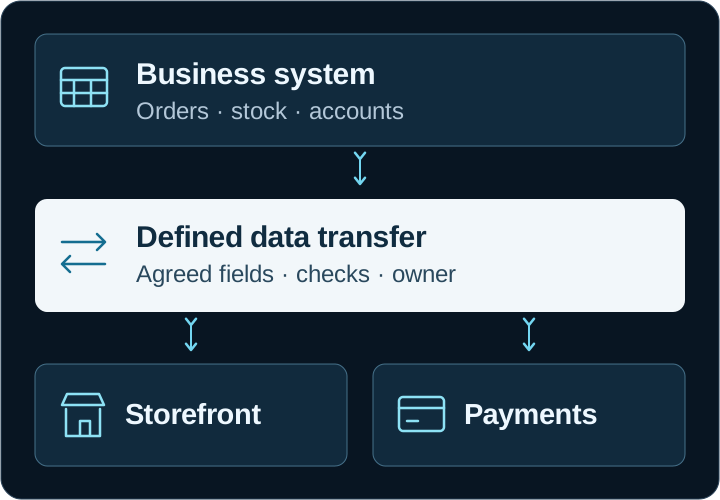
We connect applications through supported APIs or import and export processes. Available access, record volume, and update frequency determine how the connection can operate.
Our retail work includes synchronizing inventory, pricing, and product data between a hosted ERP platform and Shopify.
See our Shopify ERP integration service for inventory mapping, data checks, and ongoing support.
We connect payments to registration and orders, including successful and failed transactions, refunds, and records for reconciliation.
We investigate missed transfers, duplicate records, data mismatches, and provider changes. We review the existing code and accounts before taking over support.
We define which system controls each value and what happens when systems disagree. For example, the application that sets product pricing may differ from the one that records a payment.
We map the fields, source of record, and direction of each transfer, including corrections, cancellations, and records created before the integration starts.
We build checks for repeated requests and failed transfers, with notifications and records that help staff investigate duplicate entries, charges, and other exceptions.
Our documentation identifies subscription requirements, interfaces, vendor approvals, usage fees, and who maintains each side of the connection.
Retail software companies and multi-store operators rely on hosted platforms for point of sale, inventory, time clock, delivery, and accounting across specialty stores nationwide. briskData hosts and operates those platforms.
We also build and maintain Shopify integrations that keep online inventory, pricing, and product data synchronized with the system of record.
Read the retail projectNonprofits and event organizations often rely on aging registration portals with unreliable payment processing. briskData rebuilds registration and checkout workflows, upgrades the cloud infrastructure, and provides organizers a staging environment to rehearse before launch.
We complete these cutovers with full backups and zero interruption to active user sessions.
Read the registration projectOur proposal identifies the connections, vendor dependencies, and acceptance checks.
We test transfers, corrections, and failure cases. Your staff check the results and rehearse the affected workflow before launch.
We manage the cutover and recovery preparations, verify the connection after launch, and document operation, support, and maintenance.
Based in Cumberland, Maryland, we’ve been in business for over 15 years. We build and support integrations for organizations nationwide.
Our Maryland coverage also includes business support in Cumberland and Allegany County, Garrett County, and Hagerstown and Washington County.
Yes, when it supports the records and business rules you need. We assess the available connector, its limitations, cost, and support arrangements before recommending custom development.
We can review it. We need to understand the code, accounts, provider agreements, and operating history before accepting responsibility. If the handover includes the whole application, see our application takeover service.
The integration scope identifies the gateway and processing account required. If you also want to review your provider or processing fees, see our payment-processing review. We confirm that work separately.
Yes. Our reporting automation and dashboard services cover calculations, report validation, and delivery to the staff who use the results.
The scope depends on the available interfaces, records, business rules, existing data quality, vendor involvement, and testing. We identify initial development, outside provider fees, and ongoing support in the proposal.
Name the applications and describe the information you need to move between them. An engineer will respond within one business day.
For business software, API, e-commerce, and payment integrations. We arrange technical access separately after reviewing the work.
A 30-minute conversation with an engineer about what you need and next steps.
Times shown in Eastern Time
Available dates will appear here.
No time that works?